


WATCH
Directed By Alexander Thomas and Nikki Carmela
Shot And Edited By Alexander Thomas
1st AC Skylar Tarkington
MUA Christa Lleweln
1st AD Emmy Rose

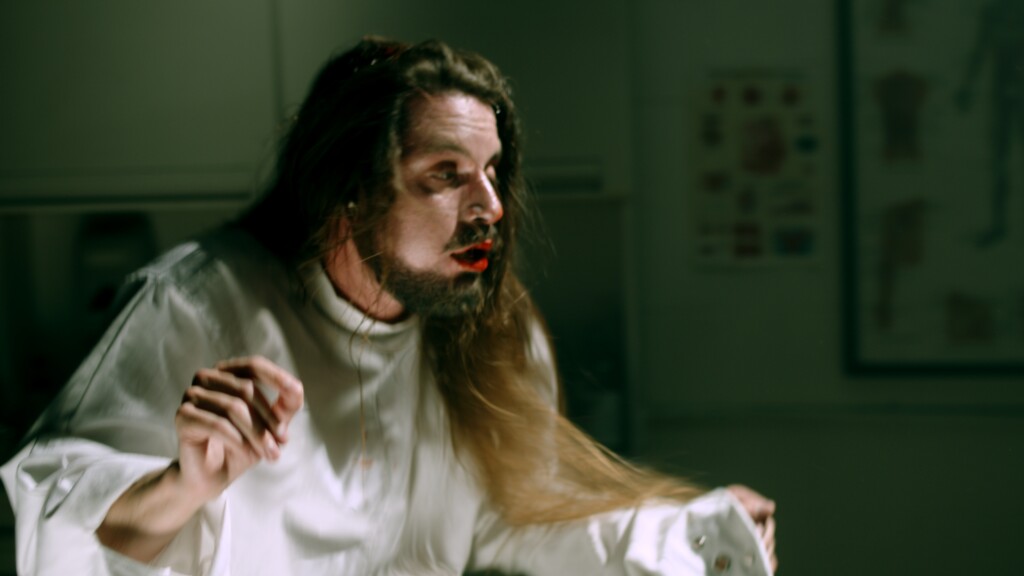

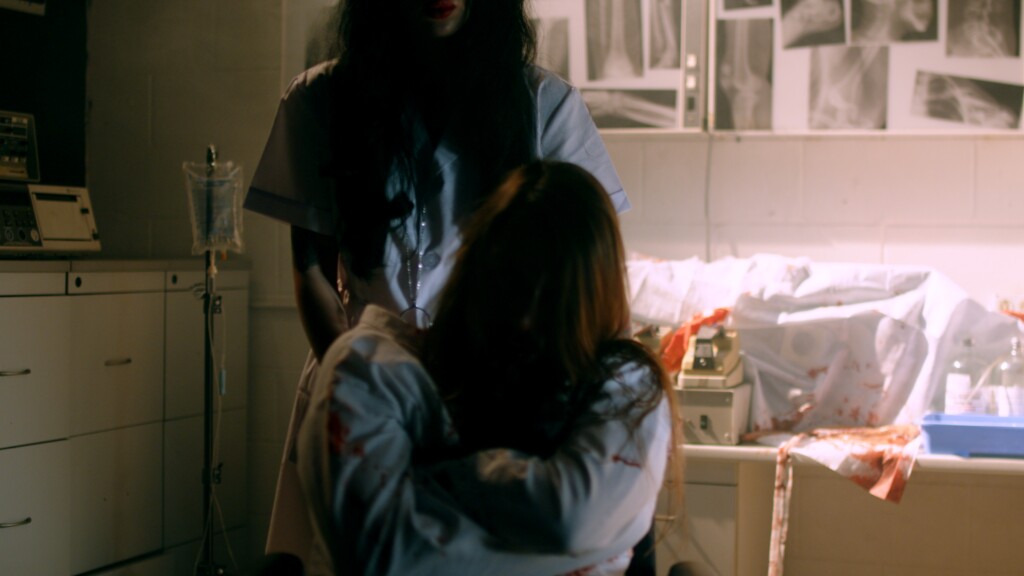
The Last of Lucy have been a creative home for some of my most ambitious work, and Empyreal Banisher presented a different kind of challenge: do something visually distinctive with almost nothing in the budget. The answer was to go back to the films that formed me. The title card typography pulls from the angular expressionism of The Cabinet of Dr. Caligari — a nod to the idea that horror has always been as much about design as dread. From there the video lives in a world of sickly greens and jaundiced yellows, a palette that makes the skin look wrong before anything has even happened yet.
“Empyreal Banisher is a descent into something that used to be human. A music video for The Last of Lucy — shot on a shoestring and soaked in the horror cinema that made me want to pick up a camera in the first place.”
The influences are worn openly: Cronenberg’s obsession with flesh that betrays its owner, and the hyper-saturated cruelty of Italian giallo. What unfolds is less a story than a mood with a body — transformation, gore, and characters that feel like they’ve crawled out of a genre tradition and into something new. Nearly everything you see was achieved in camera. The world-building was always the priority: create a place that feels internally consistent, however grotesque, so that the horror lands with weight rather than spectacle.
Behind The Scenes
Empyreal Banisher was shot in six hours — one hour less than we had for We Must Prevail, and somehow twice as ambitious. The entire visual world you see was built and torn down in a single day, which meant every decision about color, framing, and character had to be locked before we ever called action. The gore and transformation effects are all practical — real makeup, real prosthetics, applied on set. There’s no shortcut that gives you what a good practical effect does; the actors respond to it differently, the camera responds to it differently, and the audience can feel the difference even if they can’t name it. Working with The Last of Lucy again meant there was a shared shorthand — they trust the vision and that trust buys you time you don’t have on paper. Six hours to build a world from scratch. We’ve done more with less.

I wanted every creative limitation to read as a choice. The color, the in-camera effects, the typography — these weren’t workarounds, they were the whole point. The directors who made me love this genre worked with next to nothing and created images that still haven’t left me. That’s what I was chasing.


